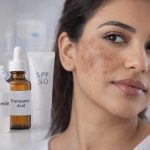

The best ingredients for Middle Eastern skin are niacinamide, tranexamic acid, hyaluronic acid, ceramides, and zinc oxide because they target pigmentation, dehydration, and sun damage common in hot climates.
Why Ingredient Selection Matters for Middle Eastern Skin
Middle Eastern skin tones (Fitzpatrick III–V) are more prone to hyperpigmentation, melasma, and dehydration due to high UV exposure and dry climates.
Studies show that melanin-rich skin has a higher risk of post-inflammatory hyperpigmentation (PIH), especially after acne or irritation.
This means harsh skincare products can make pigmentation worse instead of better.
If you haven’t read our research on formulation science, read this:
→ Internal Link: Data-Driven Skincare for Middle Eastern Skin
Top Ingredients for Middle Eastern Skin
| Ingredient | Benefit | Why It Works |
|---|---|---|
| Niacinamide | Reduces pigmentation | Controls melanin transfer |
| Tranexamic Acid | Treats melasma | Stops pigment production |
| Hyaluronic Acid | Hydration | Prevents water loss |
| Ceramides | Barrier repair | Protects from dry climate |
| Zinc Oxide | Sun protection | Blocks strong UV rays |
Is Niacinamide Good for Middle Eastern Skin?
Yes. Studies show Niacinamide can reduce hyperpigmentation by 35–68% in 8 weeks and also helps control oil and acne.
It is one of the safest ingredients for melanin-rich and sensitive skin.
What Ingredients Should Middle Eastern Skin Avoid?
Avoid:
- High percentage glycolic acid
- Strong retinoids without barrier repair
- Alcohol-based products
- Fragrance-heavy products
These can trigger pigmentation.
Conclusion
The right ingredients can prevent pigmentation, acne, and dehydration — but the wrong ones can make skin worse. That’s why region-specific formulations matter.
For a full formulation approach, read:
How NutriGlow Uses Data-Driven Formulations for Middle Eastern Skin