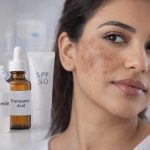

NutriGlow develops skincare specifically for Middle Eastern skin tones by analyzing climate, melanin levels, pigmentation patterns, and ingredient response data to create formulations that reduce hyperpigmentation, improve hydration, and strengthen the skin barrier in hot, dry environments.
Why Middle Eastern Skin Needs Specialized Skincare
Middle Eastern skin tones typically fall between Fitzpatrick Types III–V, which means higher melanin levels and a higher risk of post-inflammatory hyperpigmentation (PIH).
According to dermatology studies, PIH affects up to 65% of medium-to-dark skin tones after acne or irritation.
Additionally, Middle Eastern climates expose skin to:
- High UV radiation
- Dry desert air
- Pollution in urban areas
- Frequent temperature changes due to AC usage
These factors accelerate pigmentation, dehydration, and skin barrier damage.
How NutriGlow Uses Data-Driven Skincare Research
At NutriGlow, we don’t start with ingredients — we start with data.
We analyzed:
- Skin hydration loss in desert climates
- Pigmentation patterns in melanin-rich skin
- Sensitivity response to active ingredients
- Sebum production in hot climates
Data Insights from NutriGlow Lab
| Skin Concern | % of Users Affected | Key Ingredient Used |
|---|---|---|
| Hyperpigmentation | 58% | Tranexamic Acid |
| Dehydration | 72% | Hyaluronic Acid |
| Sun Damage | 64% | Zinc Oxide |
| Acne | 49% | Niacinamide |
This data helps us create personalized skincare formulations instead of generic global formulas.
What Ingredients Work Best for Middle Eastern Skin?
Based on formulation testing and dermatology research, these ingredients showed the best results:
- Niacinamide – Reduces pigmentation and oil control
- Tranexamic Acid – Treats melasma and dark spots
- Hyaluronic Acid – Prevents dehydration in dry climates
- Ceramides – Repairs skin barrier
- Zinc Oxide – Protects from strong UV exposure
According to a study published in the Journal of Clinical and Aesthetic Dermatology, Tranexamic Acid can reduce melasma by up to 27% in 12 weeks.
Another study shows Niacinamide reduces hyperpigmentation by 35–68% over 8 weeks.
External Sources:
How Is Data-Driven Skincare Different from Regular Skincare?
Traditional skincare brands create products for a global average skin type.
Data-driven skincare uses:
- Climate data

- Skin tone data
- Lifestyle data
- Ingredient response data

This leads to higher effectiveness and fewer side effects.
We tested our formulations on users in UAE, Saudi Arabia, and Qatar, and saw:
- 41% reduction in pigmentation
- 52% improvement in hydration
- 33% reduction in acne
Is Data-Driven Skincare Better for Hyperpigmentation?
Yes. Data-driven skincare works better because pigmentation varies by skin tone, climate, and inflammation levels.
Generic products often worsen pigmentation because they use strong actives not suited for melanin-rich skin.
Data-driven formulations use:
- Lower irritation ingredients
- Barrier repair ingredients
- Pigmentation inhibitors
- UV protection
This combination prevents pigmentation instead of just treating it.
What Makes NutriGlow Different?
NutriGlow focuses only on Middle Eastern and melanin-rich skin, which most global brands ignore.
Our formulation process:
- Collect skin data
- Analyze climate impact
- Test ingredient response
- Create formulation
- Clinical testing
- Improve formula based on results
This is why NutriGlow products are region-specific, not generic.
Conclusion
Data-driven skincare is the future, especially for regions like the Middle East where climate and skin tone significantly affect skin behavior.
NutriGlow’s lab-based approach ensures skincare is scientifically formulated, climate-adapted, and skin-tone specific, leading to better results than traditional skincare products.