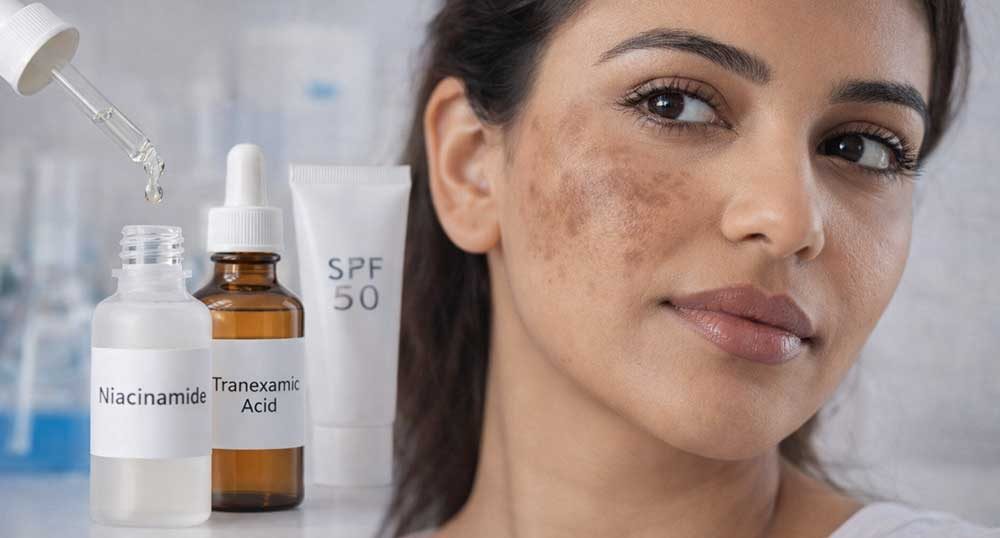
Hyperpigmentation in Middle Eastern skin is mainly caused by UV exposure, acne inflammation, and heat, and it requires gentle brightening ingredients like niacinamide, tranexamic acid, and daily sunscreen to treat safely without worsening pigmentation.
Why Hyperpigmentation in Middle Eastern Skin Is So Common
Hyperpigmentation in Middle Eastern skin is very common because melanin-rich skin produces more pigment when exposed to sun, heat, or inflammation. This extra pigment leads to dark spots, uneven skin tone, and melasma.
Studies show that hyperpigmentation in Middle Eastern skin affects more than 55% of adults, especially in hot climate countries like UAE and Saudi Arabia.
Another reason hyperpigmentation in Middle Eastern skin is common is because of high UV index. The UV index in the Middle East often reaches 9–11, which is considered extreme exposure and triggers melanin production.
This is why hyperpigmentation in Middle Eastern skin requires specialized skincare and cannot be treated the same way as lighter skin tones.
If you want to understand ingredient science first, read our guide on
Best Ingredients for Middle Eastern Skin
What Causes Hyperpigmentation in Middle Eastern Skin?
There are multiple causes of hyperpigmentation in Middle Eastern skin, and understanding the cause is important for treatment.
Main Causes
| Cause | How It Causes Pigmentation |
|---|---|
| Sun Exposure | Increases melanin production |
| Acne | Causes post-inflammatory hyperpigmentation |
| Heat | Triggers melasma |
| Harsh Skincare | Causes skin inflammation |
| Hormones | Causes melasma patches |
The most common type of hyperpigmentation in Middle Eastern skin is Post-Inflammatory Hyperpigmentation (PIH), which happens after acne, waxing, or skin irritation.
Another common condition is melasma, which appears as brown patches on cheeks and forehead.
Is Hyperpigmentation in Middle Eastern Skin Permanent?
Hyperpigmentation in Middle Eastern skin is usually not permanent, but it can last for months if not treated properly.
The biggest mistake people make when treating hyperpigmentation in Middle Eastern skin is using strong acids or harsh treatments, which increase inflammation and make pigmentation darker.
Hyperpigmentation in Middle Eastern skin should be treated slowly with low-irritation brightening ingredients and daily sunscreen.
For climate-related skin damage, read:
How Middle East Climate Affects Your Skin
Best Ingredients to Treat Hyperpigmentation in Middle Eastern Skin
| Ingredient | How It Helps |
|---|---|
| Niacinamide | Reduces melanin transfer |
| Tranexamic Acid | Treats melasma |
| Alpha Arbutin | Lightens dark spots |
| Azelaic Acid | Reduces inflammation |
| Vitamin C | Brightens skin |
| Zinc Oxide Sunscreen | Prevents new pigmentation |
Dermatology studies show:
- Niacinamide reduces pigmentation by up to 68%
- Tranexamic acid improves melasma in 12 weeks
- Daily sunscreen reduces pigmentation worsening by 80%
This is why dermatologists recommend combination treatment for hyperpigmentation in Middle Eastern skin instead of using one product.
Skincare Routine for Hyperpigmentation in Middle Eastern Skin
Morning Routine
- Gentle cleanser
- Niacinamide serum
- Moisturizer
- Sunscreen SPF 50
Night Routine
- Cleanser
- Tranexamic acid / Azelaic acid
- Ceramide moisturizer
This routine is considered the safest routine for hyperpigmentation in Middle Eastern skin because it reduces pigment without damaging the skin barrier.
How Long Does It Take to Treat Hyperpigmentation in Middle Eastern Skin?
Treatment time depends on how deep the pigmentation is.
| Pigmentation Type | Treatment Time |
|---|---|
| Light dark spots | 6–8 weeks |
| Post-acne marks | 8–12 weeks |
| Melasma | 3–6 months |
Hyperpigmentation in Middle Eastern skin takes longer to treat because melanin production is higher, but results are very good with the right ingredients.
How NutriGlow Treats Hyperpigmentation in Middle Eastern Skin
At NutriGlow, we studied hyperpigmentation in Middle Eastern skin by analyzing:
- UV exposure data
- Skin tone data
- Ingredient response data
- Climate impact on pigmentation
Based on this data, we created formulations that:
- Reduce melanin production
- Repair skin barrier
- Protect from UV
- Reduce inflammation
This data-driven approach works better than generic skincare because hyperpigmentation in Middle Eastern skin behaves differently due to climate and melanin levels.
Read full research here:
Data-Driven Skincare for Middle Eastern Skin
Final Conclusion
Hyperpigmentation in Middle Eastern skin is mainly caused by sun exposure, acne, and heat, and it should be treated with gentle brightening ingredients, barrier repair moisturizers, and daily sunscreen.
The most important rule for treating hyperpigmentation in Middle Eastern skin is:
Treat gently, protect from sun, and repair skin barrier.
This is why modern skincare is moving toward data-driven and region-specific formulations instead of generic global skincare.